

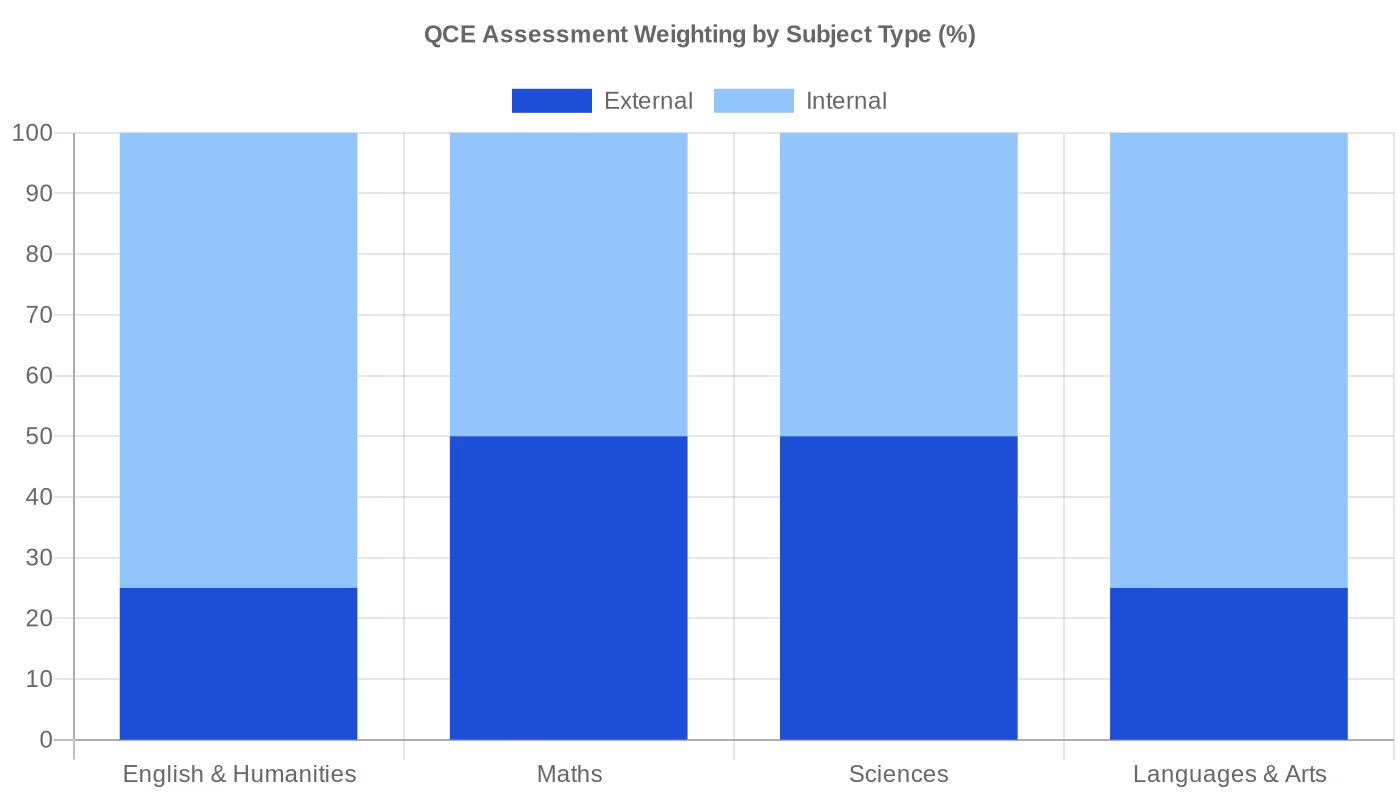
Of Queensland's 57,909 Year 12 students who sat external exams in 2025, those who performed best studied smarter, starting earlier, with a clear plan (QCAA, 2025). External exams run from 27 October to 18 November and count for 25% of your final result in most subjects, or 50% in Maths and Sciences.
This guide gives you a step-by-step plan to prepare QCE exams.
📌 Key Takeaways
- QCE external exams usually start end of October or start of November, counting 25% for most subjects and 50% for Maths and Sciences (QCAA, 2025)
- Students who read QCAA marking criteria before their practice papers write more targeted responses from the start
- An 8-week structured schedule gives you time to complete at least three timed past-paper attempts per subject
What Are QCE External Exams and How Much Do They Count?
External exams count for 25% of your total result in most General subjects, rising to 50% for Mathematics and Sciences (QCAA, 2025). A student doing Chemistry, Maths Methods, and Physics has half their final grade riding on three exams across three weeks. Knowing the exact weighting for your subjects is step one.

QCAA creates exam papers using teams of subject-matter experts, practising teachers, and academics. Each paper assesses the full range of achievement standards, from foundational to complex.
Step 1: Download the Right Materials From QCAA
The QCAA website is the only source that matters when you prepare QCE exams. It holds past papers, sample papers, marking schemes, and subject reports, all free (QCAA, 2025). Download the past two years of papers for each exam subject, along with the corresponding marking guides.
The marking guide shows exactly what examiners look for and how marks are allocated. A student who reads the marking criteria before practising knows what a full-mark response looks like before writing a single word.
Also download the Subject Area Syllabus for each subject. Use it as a checklist: tick off every dot point you understand, and circle the ones that need more work.
QCAA also publishes annual examiner reports after each sitting, which break down exactly where students lost marks. We've analysed the findings from the 2024 reports for Chemistry, Physics, Biology, English, and Maths Methods.
💡Our finding: Students who read the marking guide before attempting a past paper write noticeably better responses from the start. Seeing what earns marks first shapes how you construct your answer.
Step 2: Build an 8-Week Study Schedule That Actually Sticks
Most students who struggle with QCE exams need to work on their exam time management skills. Research from the Australian Institute for Teaching and School Leadership shows that spaced, structured study blocks produce better retention than massed cramming (AITSL, 2024). Eight weeks gives you enough time to complete three timed practice attempts per subject while consolidating content.
Weeks 8–6: Content consolidation. Work through each syllabus topic. Make condensed summary notes. Identify the 20% of content that carries the most exam marks.
It's important to write your own notes instead of using someone else's. The process of creating them is what cements the ideas in your mind
Weeks 5–3: Active recall and past papers. Stop re-reading notes. Test yourself. Complete one past paper per subject per week under timed conditions. Use the marking guide to self-assess.
Past papers are the best way to study as it gets you prepared for the final exam and focusses your energy on the type of questions you will be asked in the exam
Weeks 2–1: Targeted gaps and timing. Review every question where you dropped marks. Redo those question types under time pressure.
Block your schedule into 45-minute sessions and treat each block as a fixed commitment. If you want a broader framework for building a revision routine that holds, our guides on how to create a study plan that works for you and scientifically proven strategies to improve how you study are worth reading before you start.
Step 3: Practice Past Papers Under Timed Exam Conditions
This is the single most effective way to prepare QCE exams. Past paper practice under real conditions builds the mental stamina and timing instincts you need when marks actually count (QCAA, 2025).
The rules: phone off, timer running, no notes, quiet room. Write by hand if the real exam is handwritten. When time is up, stop.
Then mark your paper using the official QCAA marking guide, not third-party model answers. The QCAA guide tells you exactly what earns marks in Queensland.

🎯What we see at Apex: Students who complete at least three timed past papers per subject before November consistently report feeling calmer on exam day. The format, timing pressure, and handwriting fatigue all become familiar — none of it surprises them when marks are on the line.
Track your marks each time. If one section keeps costing marks, that becomes your next study focus. For the full case for why timed past papers outperform every other revision method.
Step 4: Decode QCAA Cognitive Verbs to Answer Questions Correctly
Every QCE exam question uses a specific QCAA cognitive verb, evaluate, analyse, examine, justify, discuss, and each requires a structurally different response. The QCAA Glossary of Cognitive Verbs lists 12 distinct verbs used across General subject exams (QCAA, 2025). Students who can't distinguish between them lose marks on questions they actually know the content for.
Here are the four you'll encounter most often:
- Analyse: Break something into its parts and explain how those parts relate to the whole. Don't describe — explain the relationships.
- Evaluate: Make a judgement supported by evidence. State your position, back it up with reasoning, and consider the alternative view.
- Justify: Give reasons why something is correct or appropriate. Lead with your claim, then provide supporting evidence.
- Discuss: Present multiple perspectives and evidence. Explore both sides or multiple angles of an issue.
An 'analyse' response written as a plain description scores, at best, half marks.
For a complete overview of the QCE command terms, our team has put together a guide on everything you need to know.
For subject-specific guidance on exactly how these verbs appear in practice, our guides on getting an A in QCE Chemistry, QCE Physics, QCE Biology, and QCE Maths Methods break down the question patterns that appear most often.
Step 5: Prepare Your Mind and Body for Exam Day
In the final week, performance depends heavily on sleep, food, physical movement, and logistics.
Sleep: Aim for eight hours each night before exams. A single night of poor sleep reduces cognitive performance significantly — more than you can recover through late-night study (Sleep Health Foundation Australia, 2024).
Nutrition: Eat a proper meal about two hours before each exam. Skip high-sugar foods on exam morning.
Movement: Even 20 minutes of walking improves concentration for the hours that follow.
Logistics: Confirm your timetable, venue, and what you're allowed to bring. A calculator not on the approved list, or arriving at the wrong campus, will cost you far more than an extra study hour. For a complete exam-day readiness checklist, see our 10 steps to ensure you are ready for your exam.
Is Getting a QCE Tutor Worth It Before External Exams?
For students sitting Maths, Chemistry, Physics, or Biology, a tutor can be particularly valuable in the eight weeks before externals. Those subjects carry 50% external weighting, which means a gap in one core concept affects a significant portion of the final grade.
At Apex, our QCE tutors work through past papers with students under timed conditions and mark responses using the actual QCAA marking criteria, targeted feedback on exactly where marks are being lost.
Frequently Asked Questions
When do QCE external exams take place in 2025?
QCE external exams run from 27 October to 18 November 2025 (QCAA, 2025). Students sit papers at approved external venues, not their school. Check your personal timetable through your school's QCAA coordinator.
How much does the external exam count toward my QCE result?
For most General subjects, the external exam counts for 25% of your overall result. For Mathematics, Chemistry, Physics, and Biology, it rises to 50% (QCAA, 2025). Check your specific subject syllabus on the QCAA website to confirm.
Where can I find QCE past papers?
All past papers, sample papers, and marking guides are available free on the QCAA website with a free account. Always use the official QCAA marking guide when self-assessing, not third-party model answers.
How many weeks before exams should I start preparing?
Eight weeks is the right lead time. It allows you to consolidate content (weeks 8–6), complete three timed past-paper attempts per subject (weeks 5–3), and target weaknesses in the final two weeks.
What's the best way to use QCAA marking guides?
Read the marking guide before attempting a past paper, not just after. Seeing what earns full marks first trains you to write responses with the right structure and depth. After your attempt, use the guide to score your work and identify exactly where marks were dropped.
Conclusion
Preparing for QCE external exams comes down to three things: knowing what QCAA expects, practising under real exam conditions, and showing up physically and mentally ready. Build an 8-week schedule, complete timed past papers, and know your cognitive verbs.
If you'd like structured support for your QCE exam preparation, the Apex team works with students across Queensland. Get in touch today to talk through your subjects and exam schedule.