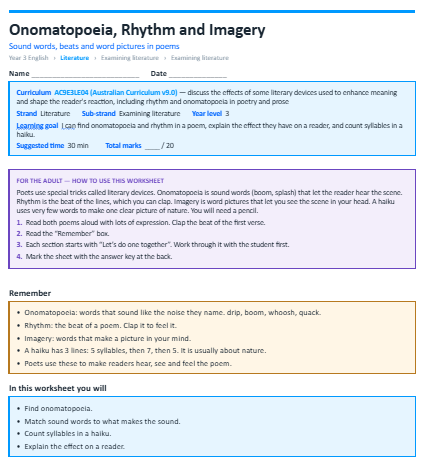
This worksheet teaches students to find onomatopoeia and rhythm in a poem about a storm, count the 5-7-5 syllables of a haiku, and explain how these devices help readers hear and picture a poem. The worksheet is split into easy, medium and hard sections, plus an extension task to stretch confident students.
The concepts it covers:
- Onomatopoeia: words that sound like the noise they name. drip, boom, whoosh, quack.
- Rhythm: the beat of a poem. Clap it to feel it.
- Imagery: words that make a picture in your mind.
- A haiku has 3 lines: 5 syllables, then 7, then 5. It is usually about nature.
- Poets use these to make readers hear, see and feel the poem.
What your child will practise:
- Finding onomatopoeia.
- Matching sound words to what makes the sound.
- Counting syllables in a haiku.
- Explaining the effect on a reader.
Every section opens with a “Let’s do one together” example and a short note for the adult helping. The download includes a full answer key, with marking guides for open answers and teaching notes.