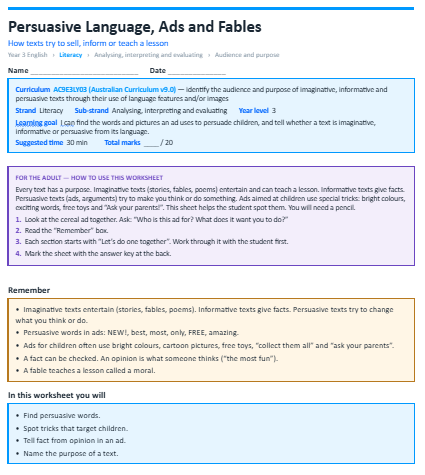
This worksheet teaches students to spot the persuasive words and tricks in an ad aimed at children, tell fact from opinion, and identify imaginative, informative and persuasive texts, including the purpose of a fable. The worksheet is split into easy, medium and hard sections, plus an extension task to stretch confident students.
The concepts it covers:
- Imaginative texts entertain (stories, fables, poems). Informative texts give facts. Persuasive texts try to change what you think or do.
- Persuasive words in ads: new!, best, most, only, free, amazing.
- Ads for children often use bright colours, cartoon pictures, free toys, “collect them all” and “ask your parents”.
- A fact can be checked. An opinion is what someone thinks (“the most fun”).
- A fable teaches a lesson called a moral.
What your child will practise:
- Finding persuasive words.
- Spotting tricks that target children.
- Telling fact from opinion in an ad.
- Naming the purpose of a text.
Every section opens with a “Let’s do one together” example and a short note for the adult helping. The download includes a full answer key, with marking guides for open answers and teaching notes.