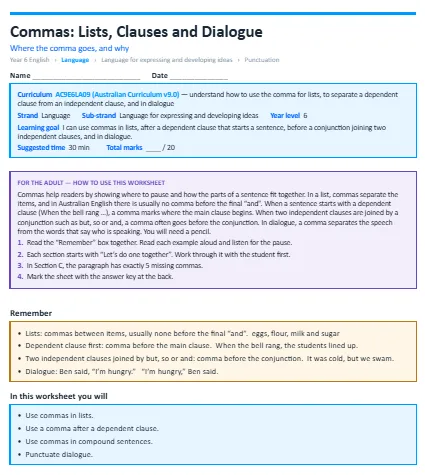
This worksheet teaches students to use commas in lists, after an opening dependent clause, before a conjunction joining two independent clauses, and in dialogue. The worksheet is split into easy, medium and hard sections, plus an extension task to stretch confident students.
The concepts it covers:
- Lists: commas between items, usually none before the final “and”. eggs, flour, milk and sugar
- Dependent clause first: comma before the main clause. When the bell rang, the students lined up.
- Two independent clauses joined by but, so or and: comma before the conjunction. It was cold, but we swam.
- Dialogue: Ben said, “I’m hungry.” “I’m hungry,” Ben said.
What your child will practise:
- Using commas in lists.
- Using a comma after a dependent clause.
- Using commas in compound sentences.
- Punctuating dialogue.
Every section opens with a “Let’s do one together” example and a short note for the adult helping. The download includes a full answer key, with marking guides for open answers and teaching notes.