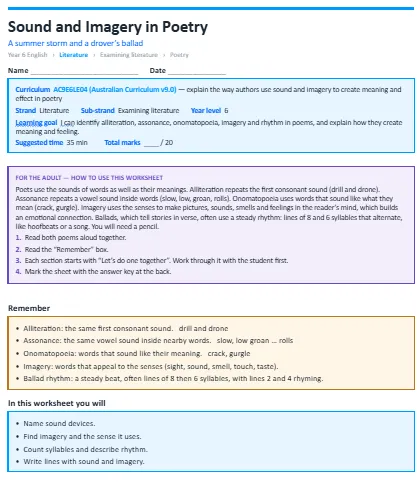
This worksheet teaches students to explain how alliteration, assonance, onomatopoeia, imagery and ballad rhythm create meaning and feeling in two poems. The worksheet is split into easy, medium and hard sections, plus an extension task to stretch confident students.
The concepts it covers:
- Alliteration: the same first consonant sound. drill and drone
- Assonance: the same vowel sound inside nearby words. slow, low groan … rolls
- Onomatopoeia: words that sound like their meaning. crack, gurgle
- Imagery: words that appeal to the senses (sight, sound, smell, touch, taste).
- Ballad rhythm: a steady beat, often lines of 8 then 6 syllables, with lines 2 and 4 rhyming.
What your child will practise:
- Naming sound devices.
- Finding imagery and the sense it uses.
- Counting syllables and describe rhythm.
- Writing lines with sound and imagery.
Every section opens with a “Let’s do one together” example and a short note for the adult helping. The download includes a full answer key, with marking guides for open answers and teaching notes.