
This worksheet builds computational thinking, teaching students to trace and design a step-by-step decision algorithm that correctly identifies whether two shapes are congruent or similar. The worksheet is split into warm-up questions, standard questions and then extension questions to test you.
The concepts it covers:
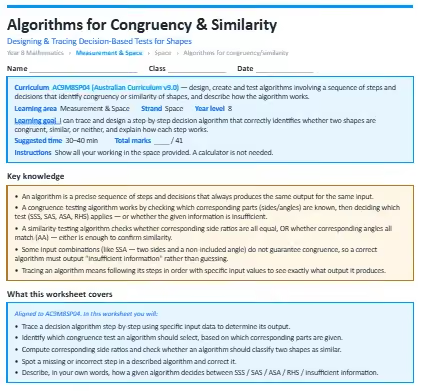
- An algorithm is a precise sequence of steps and decisions that always produces the same output for the same input.
- A congruence-testing algorithm works by checking which corresponding parts (sides/angles) are known, then deciding which test (sss, sas, asa, rhs) applies — or whether the given information is insufficient.
- A similarity-testing algorithm checks whether corresponding side ratios are all equal, or whether corresponding angles all match (aa) — either is enough to confirm similarity.
- Some input combinations (like ssa — two sides and a non-included angle) do not guarantee congruence, so a correct algorithm must output "insufficient information" rather than guessing.
- Tracing an algorithm means following its steps in order with specific input values to see exactly what output it produces.
What your child will practise:
- Tracing a decision algorithm step-by-step using specific input data to determine its output.
- Identifying which congruence test an algorithm should select, based on which corresponding parts are given.
- Computing corresponding side ratios and check whether an algorithm should classify two shapes as similar.
- Spoting a missing or incorrect step in a described algorithm and correct it.
- Describe,ing in your own words, how a given algorithm decides between sss / sas / asa / rhs / insufficient information.
Every section opens with a worked example, and the download includes a full answer key with step-by-step solutions and teaching notes on the mistakes students most commonly make.

.webp)


.webp)
%20(1).webp)

