
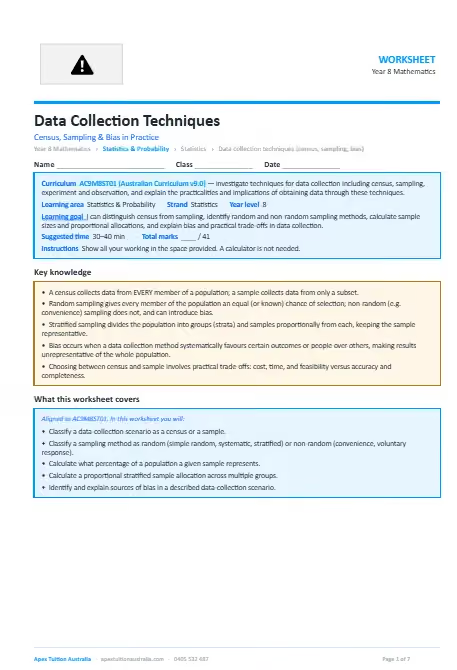
This worksheet introduces data collection, teaching students to distinguish a census from a sample, identify random and non-random sampling methods, and recognise bias in a data collection method. The worksheet is split into warm-up questions, standard questions and then extension questions to test you.
The concepts it covers:
- A census collects data from every member of a population; a sample collects data from only a subset.
- Random sampling gives every member of the population an equal (or known) chance of selection; non-random (e.g. convenience) sampling does not, and can introduce bias.
- Stratified sampling divides the population into groups (strata) and samples proportionally from each, keeping the sample representative.
- Bias occurs when a data collection method systematically favours certain outcomes or people over others, making results unrepresentative of the whole population.
- Choosing between census and sample involves practical trade-offs: cost, time, and feasibility versus accuracy and completeness.
What your child will practise:
- Classifying a data-collection scenario as a census or a sample.
- Classifying a sampling method as random (simple random, systematic, stratified) or non-random (convenience, voluntary response).
- Calculating what percentage of a population a given sample represents.
- Calculating a proportional stratified sample allocation across multiple groups.
- Identifying and explain sources of bias in a described data-collection scenario.
Every section opens with a worked example, and the download includes a full answer key with step-by-step solutions and teaching notes on the mistakes students most commonly make.
.webp)


.webp)
%20(1).webp)

