
This worksheet introduces rates, teaching students to compare two related quantities of different units — speed, pay, unit cost and more — and use rates to solve real-world problems. The worksheet is split into warm-up questions, standard questions and then extension questions to test you.
The concepts it covers:
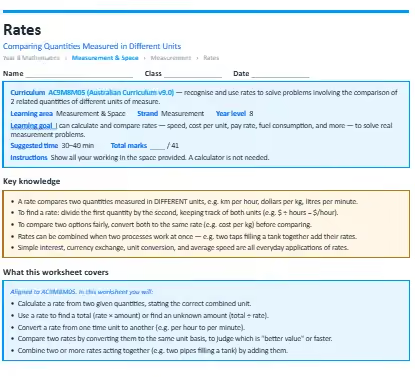
- A rate compares two quantities measured in different units, e.g. km per hour, dollars per kg, litres per minute.
- To find a rate: divide the first quantity by the second, keeping track of both units (e.g. $ ÷ hours = $/hour).
- To compare two options fairly, convert both to the same rate (e.g. cost per kg) before comparing.
- Rates can be combined when two processes work at once — e.g. two taps filling a tank together add their rates.
- Simple interest, currency exchange, unit conversion, and average speed are all everyday applications of rates.
What your child will practise:
- Calculating a rate from two given quantities, stating the correct combined unit.
- Using a rate to find a total (rate × amount) or find an unknown amount (total ÷ rate).
- Converting a rate from one time unit to another (e.g. per hour to per minute).
- Comparing two rates by converting them to the same unit basis, to judge which is "better value" or faster.
- Combining two or more rates acting together (e.g. two pipes filling a tank) by adding them.
Every section opens with a worked example, and the download includes a full answer key with step-by-step solutions and teaching notes on the mistakes students most commonly make.
.webp)


.webp)
%20(1).webp)

