
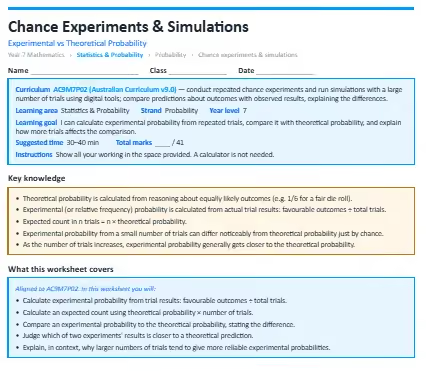
This worksheet builds understanding of chance, teaching students to calculate experimental probability from repeated trials and compare it with theoretical probability. The worksheet is split into warm-up questions, standard questions and then extension questions to test you.
The concepts it covers:
- Theoretical probability is calculated from reasoning about equally likely outcomes (e.g. 1/6 for a fair die roll).
- Experimental (or relative frequency) probability is calculated from actual trial results: favourable outcomes ÷ total trials.
- Expected count in n trials = n × theoretical probability.
- Experimental probability from a small number of trials can differ noticeably from theoretical probability just by chance.
- As the number of trials increases, experimental probability generally gets closer to the theoretical probability.
What your child will practise:
- Calculating experimental probability from trial results: favourable outcomes ÷ total trials.
- Calculating an expected count using theoretical probability × number of trials.
- Comparing an experimental probability to the theoretical probability, stating the difference.
- Judging which of two experiments' results is closer to a theoretical prediction.
- Explain,ing in context, why larger numbers of trials tend to give more reliable experimental probabilities.
Every section opens with a worked example, and the download includes a full answer key with step-by-step solutions and teaching notes on the mistakes students most commonly make.
.webp)


.webp)
%20(1).webp)

