
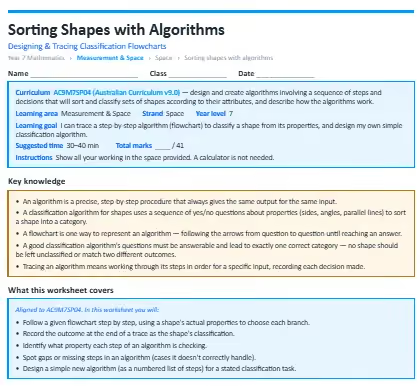
This worksheet builds computational thinking, teaching students to trace a step-by-step algorithm that classifies a shape from its properties, and to design a simple classification algorithm of their own. The worksheet is split into warm-up questions, standard questions and then extension questions to test you.
The concepts it covers:
- An algorithm is a precise, step-by-step procedure that always gives the same output for the same input.
- A classification algorithm for shapes uses a sequence of yes/no questions about properties (sides, angles, parallel lines) to sort a shape into a category.
- A flowchart is one way to represent an algorithm — following the arrows from question to question until reaching an answer.
- A good classification algorithm's questions must be answerable and lead to exactly one correct category — no shape should be left unclassified or match two different outcomes.
- Tracing an algorithm means working through its steps in order for a specific input, recording each decision made.
What your child will practise:
- Following a given flowchart step by step, using a shape's actual properties to choose each branch.
- Recording the outcome at the end of a trace as the shape's classification.
- Identifying what property each step of an algorithm is checking.
- Spoting gaps or missing steps in an algorithm (cases it doesn't correctly handle).
- Designing a simple new algorithm (as a numbered list of steps) for a stated classification task.
Every section opens with a worked example, and the download includes a full answer key with step-by-step solutions and teaching notes on the mistakes students most commonly make.
.webp)


.webp)
%20(1).webp)

