
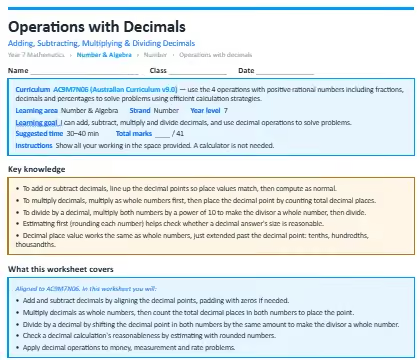
This worksheet builds fluency with the four operations — adding, subtracting, multiplying and dividing decimals — through calculations grounded in everyday contexts. The worksheet is split into warm-up questions, standard questions and then extension questions to test you.
The concepts it covers:
- To add or subtract decimals, line up the decimal points so place values match, then compute as normal.
- To multiply decimals, multiply as whole numbers first, then place the decimal point by counting total decimal places.
- To divide by a decimal, multiply both numbers by a power of 10 to make the divisor a whole number, then divide.
- Estimating first (rounding each number) helps check whether a decimal answer's size is reasonable.
- Decimal place value works the same as whole numbers, just extended past the decimal point: tenths, hundredths, thousandths.
What your child will practise:
- Adding and subtract decimals by aligning the decimal points, padding with zeros if needed.
- Multiplying decimals as whole numbers, then count the total decimal places in both numbers to place the point.
- Dividing by a decimal by shifting the decimal point in both numbers by the same amount to make the divisor a whole number.
- Checking a decimal calculation's reasonableness by estimating with rounded numbers.
- Applying decimal operations to money, measurement and rate problems.
Every section opens with a worked example, and the download includes a full answer key with step-by-step solutions and teaching notes on the mistakes students most commonly make.
.webp)


.webp)
%20(1).webp)

